Unmasking Prejudice: An Analysis of Wole Soyinka's "Telephone Conversation"
- Mar 12
- 10 min read
Updated: Mar 12

If you have ever experienced a moment where everyday politeness masks deep-seated ignorance, Wole Soyinka’s poem "Telephone Conversation" will resonate profoundly with you.
Appearing initially in the 1963 collection Modern Poetry from Africa, this poem is a masterful, provocative satire of racial prejudice, misguided civility, and the power of language. Let’s break down this brilliant piece of literature and explore how Soyinka uses razor-sharp wit to expose the absurdity of racism.
The Mundane Setup: A Simple Phone Call
The poem opens with a completely ordinary scenario—a man calling a landlady about a rental apartment. The title itself, "Telephone Conversation," is deliberately simple, creating a sharp contrast with the shocking and racially charged dialogue that is about to unfold.
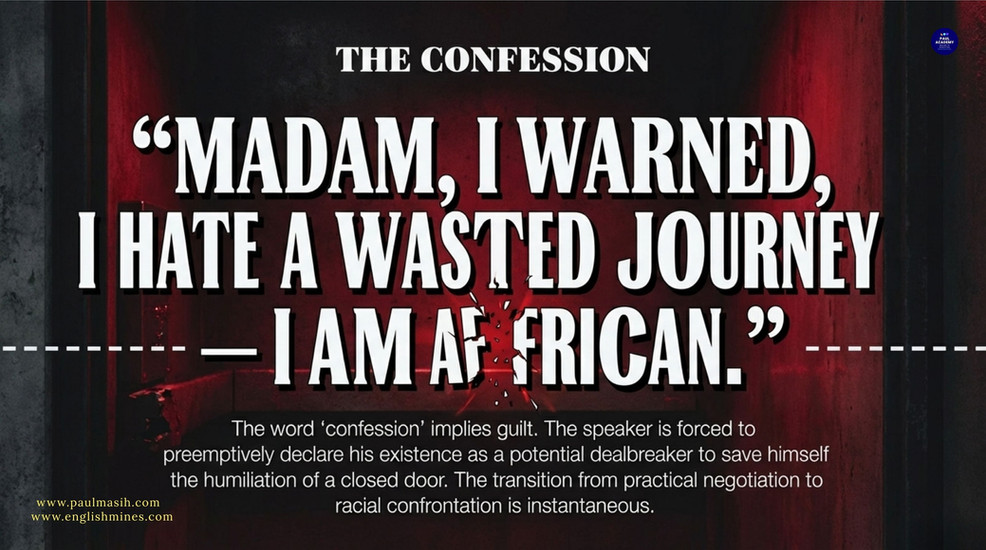
The price is right, and the location is fine, but the speaker feels compelled to make what he ironically calls a "self-confession": he warns the landlady that he is African. He does this to avoid a "wasted journey," anticipating that her prejudice might lead her to reject him in person. By framing his race as a "confession" (as if it were a crime), the speaker instantly highlights the toxic racial dynamics of the society he is navigating.

The Irony of "Polite" Racism in Telephone Conversation
Upon hearing that the prospective tenant is Black, the landlady falls silent. The speaker describes this as the "Silenced transmission of / Pressurized good-breeding." This is where the poem's central irony lies: the landlady desperately tries to maintain the polite, refined manners of an upper-class British woman, yet her underlying behavior is profoundly ugly and discriminatory.
When she finally speaks, her question is absurd and highly offensive: "HOW DARK? ... ARE YOU LIGHT OR VERY DARK?"
She attempts to sound "considerate" by varying her emphasis on the words, but the cold, clinical nature of her question reduces a living human being to a mere object to be categorized by a color chart.
Grounding in a Surreal Reality
The sheer absurdity of the question leaves the speaker in a state of "dumbfoundment" (complete speechless shock). To process what is happening, he desperately focuses on his physical surroundings in the phone booth: the "Red booth. Red pillar-box. Red double-tiered / Omnibus."
Focusing on these vibrant red, real-world British objects grounds him. It is his mind's way of confirming that this surreal, overtly racist interaction is actually happening in reality. He also notes the "Stench / Of rancid breath of public hide-and-speak," a powerful metaphor for the foul, toxic, and cowardly nature of this disguised, over-the-phone racism.

Sarcasm as a Weapon
Once the speaker recovers from his shock and adjusts to her "wavelength," he decides to fight back not with anger, but with brilliant, mocking intellect.
When the landlady clinically asks if he is like "plain or milk chocolate," the speaker deliberately confuses her by using a highly specific artistic term: "West African sepia." When the ignorant landlady aggressively admits she doesn't know what that means, he simplistically likens his skin to "brunette."
The comedic climax arrives when the landlady assumes "brunette" means entirely dark. The speaker playfully deconstructs her racist logic by pointing out that human bodies are not just one single, flat color:
His face may be dark.
The palms of his hands and soles of his feet are "peroxide blonde" (pale).
And, thanks to the friction of sitting down, his bottom has turned "raven black."

The Takeaway of Telephone Conversation
Sensing that the landlady is furious and about to violently slam the phone down (the "receiver rearing on the thunderclap"), the speaker delivers his final, sarcastically polite plea: "Madam... wouldn't you rather / See for yourself?"
Ultimately, "Telephone Conversation" is more than just a poem about a racist encounter. It is a powerful demonstration of how characterizing and judging people strictly by their skin color diminishes their humanity. By using humor and sharp intellect to mock the landlady's ignorance, the speaker reclaims his dignity and leaves the reader laughing at the sheer foolishness of prejudice.
Have you studied "Telephone Conversation" in your literature class? What was your favorite line or metaphor? Let's discuss in the comments below!

PARAPHRASE OF THE POEM TELEPHONE CONVERSATION
Original Poem Lines | Line-by-Line Paraphrase |
The price seemed reasonable, location Indifferent. The landlady swore she lived Off premises. | The apartment's rent was fair, and I didn't mind the neighbourhood. The landlady promised she did not live in the same building. |
Nothing remained But self-confession. "Madam," I warned, "I hate a wasted journey - I am African." | The only thing left to do was tell the truth. "Ma'am," I cautioned her, "I don't want to travel there for nothing—I am a black African." |
Silence. Silenced transmission of Pressurized good-breeding. | She went completely quiet on the phone, suppressing her initial reaction to maintain her polite, upper-class manners. |
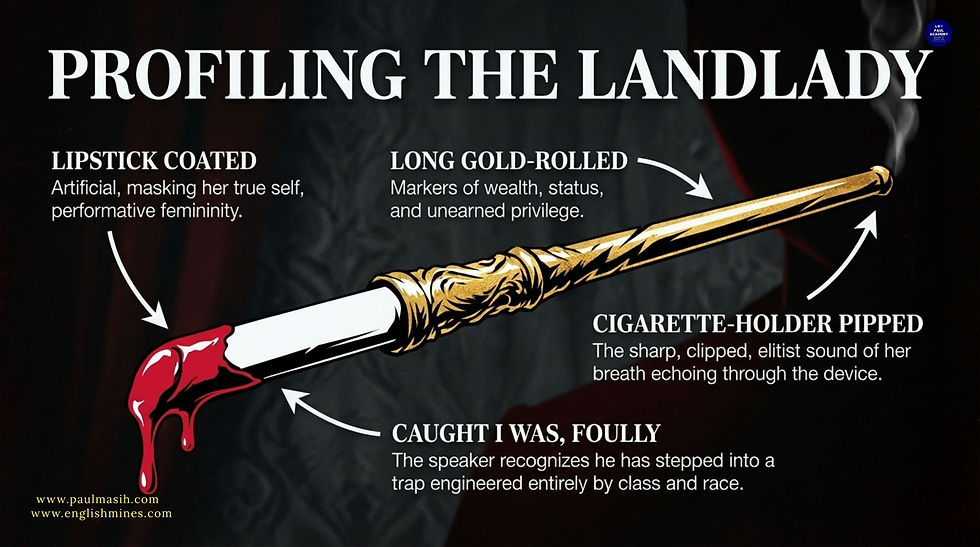
Voice, when it came, Lipstick coated, long gold-rolled Cigarette-holder pipped. Caught I was, foully. | When she finally spoke, her voice sounded wealthy, artificial, and snobbish. I felt unfairly trapped by the prejudice of the situation. |
"HOW DARK?"... I had not misheard... "ARE YOU LIGHT OR VERY DARK?" | She bluntly asked about my skin tone. I couldn't believe my ears as she clarified, asking if my skin was light or very dark. |
Button B. Button A. Stench Of rancid breath of public hide-and-speak. Red booth. Red pillar-box. Red double-tiered Omnibus squelching tar. It was real! | I looked at the buttons in the phone booth, feeling the suffocating, stale air of this secretive public conversation. Seeing the red phone booth, red mailbox, and red bus outside proved this absurd moment was actually happening. |
Shamed By ill-mannered silence, surrender Pushed dumbfoundment to beg simplification. Considerate she was, varying the emphasis - | Humiliated by the awkward pause, my shock forced me to give in and ask her to explain what she meant. She politely repeated herself, just stressing different words. |
"ARE YOU DARK? OR VERY LIGHT?" Revelation came. "You mean-like plain or milk chocolate?" | She asked again if I was dark or light. Suddenly, I understood how to play her game and asked if she meant dark chocolate or milk chocolate. |
Her assent was clinical, crushing in its light Impersonality. Rapidly, wavelength adjusted, I chose. | She agreed with a cold, emotionless detachment that felt devastating. I quickly adapted to her shocking way of thinking and made my choice. |
"West African sepia" - and as an afterthought, "Down in my passport." | I told her my color was "West African sepia," adding that this was the official color listed in my passport. |
Silence for spectroscopic Flight of fancy, till truthfulness clanged her accent Hard on the mouthpiece. | She paused, trying to imagine exactly what shade that was in her mind, until she broke the silence by speaking harshly and bluntly into the phone. |
"WHAT'S THAT?" conceding, "DON'T KNOW WHAT THAT IS." "Like brunette." | She admitted she didn't know what "sepia" meant. I simplified it for her, telling her it was like the color of brunette hair. |
"THAT'S DARK, ISN'T IT?" "Not altogether. Facially, I am brunette, but madam, you should see The rest of me. | She immediately assumed that meant I was dark. I replied that it wasn't that simple; my face is dark, but she would need to see the rest of my body. |
Palm of my hand, soles of my feet Are a peroxide blonde. | I sarcastically explained that the palms of my hands and the bottoms of my feet are as pale as bleached blonde hair. |
Friction, caused - Foolishly, madam-by sitting down, has turned My bottom raven black-One moment madam!" - sensing | I joked that the friction from the foolish act of sitting down had turned my backside pitch black. Sensing her rising anger, I told her to wait a moment. |
Her receiver rearing on the thunderclap About my ears-"Madam," I pleaded, "wouldn't you rather See for yourself?" | Realizing she was about to angrily slam the phone down loudly in my ear, I begged her to just meet me in person to see for herself. |
Here are the answers to the questions about Wole Soyinka's "Telephone Conversation," based on the poem:
1. What is the poem “Telephone Conversation” about? / What is its message?
The poem describes a telephone call between a black speaker and a white landlady concerning an apartment for rent. The interaction begins pleasantly until the speaker feels compelled to make a "self-confession" that he is African to avoid a wasted journey. At this point, the landlady demands to know exactly how "light" or "dark" his skin is.
The Message: The poem is a "provocative satire of racial prejudice, misguided civility and the power of language". The main message is that characterizing and judging people based on the color of their skin is absurd, ignorant, and ultimately "diminishes their humanity". The speaker cleverly mocks the landlady to highlight the ridiculousness of her prejudice.
2. What is the irony in the poem?
The central irony of the poem revolves around "misguided civility". The landlady desperately tries to maintain her polite, upper-class manners (described as "pressurized good-breeding") while simultaneously asking highly offensive, dehumanizing, and racist questions.
5 Examples of Irony in the Poem:
1. The "Self-Confession": The speaker ironically treats his race as if it were a crime or a terrible secret that he must "confess" to the landlady.
2. "Pressurized good-breeding": The landlady is supposedly refined and well-mannered, yet her behavior—judging a tenant by their skin shade—is profoundly ugly and rude.
3. "Considerate she was": The speaker sarcastically describes the landlady as "considerate" when she is actually just repeating her incredibly offensive question ("ARE YOU DARK? OR VERY LIGHT?") with different emphasis.
4. The "Clinical" Assent: When the speaker mockingly asks if she means "plain or milk chocolate," she agrees in a cold, "clinical" manner, ironically reducing a living human being to a consumable object.
5. The Final Plea: Just as the furious landlady is about to violently hang up the phone (the "receiver rearing on the thunderclap"), the speaker uses extreme, sarcastic politeness to ask, "Madam... wouldn't you rather / See for yourself?".
3. Explaining Specific Elements of the Poem
The Landlady's "Rancid Breath": The phrase "Stench / Of rancid breath of public hide-and-speak" is used metaphorically. It represents the foul, toxic, and offensive nature of the disguised racism the speaker is experiencing during this public phone call.
The Red Colour (Booth and Pillar-box): Shocked into "dumbfoundment" by the absurdity of her question, the speaker lists the red objects around him ("Red booth. Red pillar-box. Red double-tiered / Omnibus"). He focuses on his physical surroundings to ground himself and confirm that this surreal, racist interaction is actually happening in reality.
Character of the Landlady: The landlady is depicted as a wealthy, pretentious, and superficial woman, vividly imagined by the speaker with a "Lipstick coated, long gold-rolled / Cigarette-holder". Underneath her polite exterior, she is deeply prejudiced and ignorant.
Significance of the Title: The title "Telephone Conversation" is completely mundane and ordinary. This simplicity sharply contrasts with the shocking, racially charged dialogue that actually takes place, emphasizing how routinely and casually racism is embedded in everyday life.

Here are 30 words and phrases from Wole Soyinka's "Telephone Conversation", explained in the context of the poem's satire on racial prejudice:
1. Location indifferent: The neighbourhood of the apartment was neither particularly good nor bad, or it was of no special concern to the speaker.
2. Off premises: The landlady does not live in the same building as the rental apartment.
3. Self-confession: The act of admitting something about oneself. The speaker sarcastically uses this term to reveal he is African, framing his race as a "crime" to a prejudiced society.
4. Wasted journey: A futile trip. The speaker warns the landlady of his race to avoid traveling to the apartment only to be rejected.
5. Silenced transmission: The heavy, awkward pause over the telephone line after the speaker reveals his race.
6. Pressurized good-breeding: The landlady's forced, tense effort to maintain her polite, upper-class manners despite her underlying prejudice.
7. Lipstick coated: A descriptive phrase where the speaker imagines the landlady as a wealthy, superficial woman.
8. Gold-rolled Cigarette-holder: An imagined accessory that further highlights the landlady's pretentious, upper-class social status.
9. Pipped: A short, sharp sound made over the phone, possibly the sound of her breath through the cigarette holder or the sudden breaking of the silence.
10. Caught I was, foully: The speaker feeling unfairly trapped by the sudden and overt racism of the landlady's questioning.
11. Button B. Button A.: The physical, mechanical buttons inside a traditional British public telephone booth.
12. Stench of rancid breath: A metaphor for the foul, toxic, and offensive nature of this racist public interaction.
13. Public hide-and-speak: A play on the game "hide-and-seek," referring to the anonymity of the phone booth and the evasive, prejudiced nature of the conversation.
14. Red pillar-box: A traditional red British public mailbox located outside the phone booth.
15. Red double-tiered Omnibus: A classic red British double-decker bus passing by.
16. Squelching tar: The sticky, wet sound made by the bus driving over melting or wet road tar.
17. Ill-mannered silence: The rude, uncomfortable pause from the landlady that makes the speaker feel momentarily shamed.
18. Dumbfoundment: A state of being completely speechless with shock or astonishment at the landlady's racist question.
19. Beg simplification: The speaker asking the landlady to clarify her absurd question about his skin tone because he cannot believe what he is hearing.
20. Varying the emphasis: The landlady repeating her offensive question by stressing different words ("ARE YOU DARK? OR VERY LIGHT?").
21. Revelation: The sudden, shocking realization by the speaker that the landlady is genuinely trying to classify his exact skin shade.
22. Clinical: Cold, detached, and scientific; used to describe how the landlady assents to the "chocolate" comparison.
23. Crushing in its light impersonality: Devastatingly cruel because of how casually and unfeelingly the landlady categorizes him as an object rather than a human being.
24. Wavelength adjusted: The speaker rapidly changing his mental approach to match and cleverly mock her absurdity.
25. West African sepia: A brownish artistic color term the speaker uses to sarcastically and intellectually confuse the landlady.
26. Spectroscopic Flight of fancy: The landlady's mind struggling to imagine the exact colour spectrum or shade the speaker just named.
27. Truthfulness clanged: The moment the landlady harshly and loudly admits she does not know what "sepia" means.
28. Peroxide blonde: An artificial, bleached yellow-white colour; used humorously by the speaker to describe the pale soles of his feet and the palms of his hands.
29. Raven black: A deep, glossy black colour; used playfully by the speaker to describe his bottom.
30. Receiver rearing on the thunderclap: The loud, explosive noise of the angry landlady about to slam the telephone receiver down to hang up on him.




Comments