Exploring the Spirit of India: A Deep Dive into "Bharat Our Land"
Updated: Apr 12
Welcome to a journey through the heart of India's cultural identity and heritage, as explored in the inspiring lesson "Bharat Our Land". This lesson beautifully dissects an ode—a lyrical poem expressing deep admiration, praise, and reverence—dedicated to the unmatched greatness of India. Here are the key takeaways from our exploration of this diverse and historical nation.

Geographical Majesty and Symbolism in Bharat Our Land
The poem vividly captures India's breathtaking landscapes through powerful imagery and symbolism. It highlights the mighty Himavant (Himalayas), asserting there is "no equal anywhere on earth," and praises the flowing movement of the generous Ganga river. India is metaphorically celebrated as a "sunny golden land", a phrase used to represent the nation's richness, glory, strength, and permanence.
A Deep Spiritual and Philosophical Legacy Beyond its physical beauty, the lesson emphasizes India's profound spiritual roots dating back to "hoary antiquity" (ancient times). The poet makes powerful allusions to the sacred Upanishads, which symbolize deep wisdom, enlightenment, and spiritual depth. The poem also honors the nation's philosophical evolution by referencing Brahma-knowledge and Buddha's Dhamma, highlighting India's historical role in shaping major traditions rooted in compassion and non-violence. The text reminds us that "many a sage has sanctified this land," blessing and purifying it through the ages.
The Power of Poetic Devices To foster a deep sense of national pride, the poet employs several impactful literary devices:
Ode: The entire piece uses grand and expressive language to highlight the extraordinary qualities of India.
Hyperbole: The poet uses extreme exaggeration to make their assertions about India's greatness more impressive and intense.
Allusion: Indirect references to ancient scriptures and historical figures like Gautama Buddha enrich the reader's understanding of the country's philosophical core.
Ultimately, the lesson leaves us reflecting on the poem's powerful refrain: "She’s peerless, let’s praise her!". It is a compelling reminder of India's unique position in the world—an unmatched land of gallant warriors, boundless wisdom, and unparalleled heritage.

Reading for Appreciation
The mighty Himavant is ours—there’s no equal anywhere on earth.The generous Ganga is ours—which other river can match her grace?The sacred Upanishads are ours—what scriptures else to name with them?This sunny golden land is ours—she’s peerless, let’s praise her!
Gallant warriors have lived here,many a sage has sanctified this land.The divinest music has been heard here,and here all auspicious things are found.
Here is your two-column paraphrase in the required format:
Paraphrase of the Poem "Bharat Our Land"
Completed Poem: Bharat Our Land
(Subramania Bharati)
The mighty Himavant is ours—
there’s no equal anywhere on earth.
The generous Ganga is ours—
which other river can match her grace?
The sacred Upanishads are ours—
what scriptures else to name with them?
This sunny golden land is ours—
she’s peerless, let’s praise her!
Gallant warriors have lived here,
many a sage has sanctified this land.
The divinest music has been heard here,
and here all auspicious things are found.
Here Brahma-knowledge has taken root,
and the Buddha preached his dhamma here.
Of hoary antiquity is Bharat,
she’s peerless, let’s praise her!...
Paraphrase in Two Columns
Original Text | Paraphrased (Simple English with Notes) |
The mighty Himavant is ours—there’s no equal anywhere on earth. | The great Himalayan mountains belong to our country, and no other mountains in the world are as majestic as them. 🔹 Word Meaning: Himavant – Himalayas; mighty – powerful. 🔹 Literary Device: Hyperbole – “no equal anywhere on earth.” 🔹 Note: Expresses pride in India’s geography. |
The generous Ganga is ours—which other river can match her grace? | The holy river Ganga is ours, and no other river can equal its beauty and importance. 🔹 Word Meaning: generous – giving freely; grace – beauty. 🔹 Literary Device: Rhetorical Question. 🔹 Note: Highlights spiritual and cultural value. |
The sacred Upanishads are ours—what scriptures else to name with them? | The holy Upanishads belong to us, and no other religious texts can be compared to their wisdom. 🔹 Word Meaning: sacred – holy; scriptures – religious texts. 🔹 Literary Device: Allusion; Rhetorical Question. 🔹 Note: Shows India’s rich philosophy. |
This sunny golden land is ours—she’s peerless, let’s praise her! | This bright and rich land is ours, and it is unmatched, so we should admire and celebrate it. 🔹 Word Meaning: peerless – unequalled. 🔹 Literary Device: Personification – land as “she”; Exclamation. 🔹 Note: Strong patriotic feeling. |
Gallant warriors have lived here, | Brave soldiers have lived in this land. 🔹 Word Meaning: gallant – brave. 🔹 Literary Device: Epithet. 🔹 Note: Refers to heroic history. |
many a sage has sanctified this land. | Many wise saints have made this land holy through their spiritual actions. 🔹 Word Meaning: sage – wise man; sanctified – made holy. 🔹 Literary Device: Alliteration – “sage…sanctified.” 🔹 Note: Refers to spiritual heritage. |
The divinest music has been heard here, | The most beautiful and heavenly music has originated in this land. 🔹 Word Meaning: divinest – most divine. 🔹 Literary Device: Superlative. 🔹 Note: Refers to Indian music tradition. |
and here all auspicious things are found. | All good, sacred, and fortunate things can be found in this land. 🔹 Word Meaning: auspicious – शुभ. sacred hour 🔹 Literary Device: Generalization. 🔹 Note: Emphasizes completeness and richness. |
Here Brahma-knowledge has taken root, | Deep spiritual knowledge about the ultimate reality (Brahman) has developed and grown in this land. 🔹 Word Meaning: Brahma-knowledge – spiritual wisdom; taken root – firmly established. 🔹 Literary Device: Metaphor – knowledge compared to a plant. 🔹 Note: Refers to ancient Indian philosophy. |
and the Buddha preached his dhamma here. | Lord Buddha taught his religious principles and path of righteousness in this land. 🔹 Word Meaning: dhamma – teachings of Buddha. 🔹 Literary Device: Allusion – reference to Buddha. 🔹 Note: Shows India as birthplace of religions. |
Of hoary antiquity is Bharat, | India is a very ancient country with a long and glorious history. 🔹 Word Meaning: hoary antiquity – very old age. 🔹 Literary Device: Inversion – poetic word order. 🔹 Note: Emphasizes ancient civilization. |
she’s peerless, let’s praise her! | India is unique and unmatched, so we should praise and honour her. 🔹 Word Meaning: peerless – without equal. 🔹 Literary Device: Repetition – reinforces patriotism. 🔹 Note: Concludes with national pride. |

Check Your Understanding
QUESTIONS
I Fill in the blanks by choosing appropriate words from the box given below to complete the summary of the poem.
Word Box:
warriors
peerless
Upanishads
Ganga
Buddha
Himavant
sages
praise
historical greatness
Brahma-knowledge
Paragraph:
The poem is a tribute to India, celebrating its natural beauty, spiritual heritage, and 1. ______. The poet praises the 2. ______, describing it as mighty and unparalleled. The 3. ______ is depicted as generous and graceful, while the 4. ______ are honoured as sacred and unmatched. The poem highlights the contributions of 5. ______ and 6. ______ who have enriched the land with their bravery and wisdom. It also acknowledges the presence of 7. ______ and the teachings of 8. ______, highlighting India’s deep-rooted spiritual and philosophical traditions. The poet repeatedly asserts that India is 9. ______, urging everyone to 10. ______ her.
ANSWERS
Here is the completed summary of the poem with the appropriate words from the word box:
The poem is a tribute to India, celebrating its natural beauty, spiritual heritage, and 1. historical greatness. The poet praises the 2. Himavant, describing it as mighty and unparalleled. The 3. Ganga is depicted as generous and graceful, while the 4. Upanishads are honoured as sacred and unmatched. The poem highlights the contributions of 5. warriors and 6. sages who have enriched the land with their bravery and wisdom. It also acknowledges the presence of 7. Brahma-knowledge and the teachings of 8. Buddha, highlighting India’s deep-rooted spiritual and philosophical traditions. The poet repeatedly asserts that India is 9. peerless, urging everyone to 10. praise her.
List of Answers:
1. historical greatness
2. Himavant
3. Ganga
4. Upanishads
5. warriors
6. sages
7. Brahma-knowledge
8. Buddha
9. peerless
10. praise
QUESTIONS
II Complete the following features about the poem.
1. The impact on the readers (mood): ______
2. The poet’s attitude (tone): ______
3. The rhyme scheme: ______
4. Examples of personification: ______
III What is the impact of the refrain, “she’s peerless, let’s praise her!”?
IV Complete the following sentence appropriately.India is metaphorically described as ‘this sunny golden land,’ suggesting that it is ______.
V The poet uses symbolism. Match the symbols in Column 1 to what they suggest in Column 2.
Column 1 | Column 2 |
1. Himavant | (i) knowledge and enlightenment |
2. Ganga | (ii) spiritual and philosophical legacy |
3. Upanishads | (iii) purity and generosity |
4. Gallant warriors and sages | (iv) richness and glory |
5. Brahma-knowledge and Buddha’s Dhamma | (v) strength and permanence |
6. Sunny golden land | (vi) courage and wisdom |
VI The poet uses imagery (descriptive language to create vivid mental pictures that appeal to the senses). Give any two examples from the poem.
VII What is the impact of the use of hyphens in the first stanza? Select the options that are true.
ANSWERS
II Complete the following features about the poem.
1. The impact on the readers (mood): Fosters a strong sense of national pride and inspires admiration for the country's heritage.
2. The poet’s attitude (tone): Expresses deep admiration, reverence, and enthusiasm, which is characteristic of an ode.
3. The rhyme scheme: Please note that the provided sources do not explicitly identify the rhyme scheme of the poem. However, based on the excerpt provided in the text (e.g., ours / earth / ours / grace / ours / them), the lines do not appear to follow a traditional, strict end-rhyme scheme.
4. Examples of personification:
o India is personified as a female figure with the pronoun "She" in the line "She's peerless, let's praise her!".
o The river Ganga is personified as a graceful female figure in the line "which other river can match her grace?".
III What is the impact of the refrain, “she’s peerless, let’s praise her!”? The refrain repeatedly asserts that the country is incomparably valuable and unmatched. Because it is an ode, this repetition reinforces the poet's deep admiration and actively urges the reader to celebrate and praise India's extraordinary qualities.
IV Complete the following sentence appropriately. India is metaphorically described as ‘this sunny golden land,’ suggesting that it is a place of immense richness and glory.
V The poet uses symbolism. Match the symbols in Column 1 to what they suggest in Column
2. Here is the correct matching based on the text's context and definitions:
1. Himavant matches with (v) strength and permanence
2. Ganga matches with (iii) purity and generosity
3. Upanishads matches with (i) knowledge and enlightenment
4. Gallant warriors and sages matches with (vi) courage and wisdom
5. Brahma-knowledge and Buddha’s Dhamma matches with (ii) spiritual and philosophical legacy
6. Sunny golden land matches with (iv) richness and glory
VI The poet uses imagery (descriptive language to create vivid mental pictures that appeal to the senses). Give any two examples from the poem.
1. "The mighty Himavant is ours-" creates a vivid, imposing picture of the strong, towering Himalayan mountain range.
2. "The generous Ganga is ours-" (and asking "which other river can match her grace?") invokes a flowing, graceful visual of the river, while the description of India as a "sunny golden land" paints a bright, visually radiant picture of the nation's landscape.
VII What is the impact of the use of hyphens in the first stanza? Select the options that are true. Based on the text, the true options are:
1. Creates deliberate pauses to reinforce the sense of admiration and pride.
5. Presents a key element of India’s greatness before the hyphen and makes a strong assertion about its uniqueness after the hyphen.
QUESTIONS
VIII The poet uses hyperbole in the poem.
Hyperbole (hi-puh-buh-lee) is a figure of speech that involves extreme exaggeration to highlight a point or create a dramatic effect. It is not meant to be taken literally but is used to make something sound more impressive or intense.
For example:
My luggage weighs a tonne. Does the luggage actually weigh a tonne?
She was so happy that her smile was a mile wide. Can a smile be a mile wide?
IX The poem is an ode.
An ode is a lyrical poem that expresses deep admiration, praise, or reverence for a person, place, object, or idea. It is often written in an elevated and formal style, celebrating the subject with enthusiasm and emotion.
An ode's language is often grand and expressive; and it seeks to highlight the extraordinary qualities of its subject.
Now, identify examples from the poem that correspond to it being an ode.
X The poet uses allusion in the poem.
Allusion is a literary device where a writer makes an indirect reference to a well-known person, place, event, literary work, or cultural element without explicitly mentioning it. The reader is expected to recognise and understand the reference based on prior knowledge. Allusions can come from mythology, religion, literature, history, or popular culture.
For example: He is a real Einstein in the mathematics class. (This alludes to Albert Einstein, meaning the student is very intelligent, especially in mathematics or science.)
Now, read the explanations and identify the matching allusions from the poem for the following.
An allusion to the ancient Indian scriptures that form the philosophical core and symbolise deep wisdom and enlightenment.
An allusion to the concept of spiritual knowledge associated with self-realisation and ultimate truth.
An allusion to Gautama Buddha's teachings, which include compassion, non-violence, and enlightenment. This highlights India's role in shaping major religious and philosophical traditions.
___________________________________________________________
ANSWERS
VIII The poet uses hyperbole in the poem. Although there is no explicit question here, an excellent example of hyperbole from the poem is the phrase describing the Himavant: "there's no equal anywhere on earth". The poet uses this extreme exaggeration to emphasize the unmatched grandeur and might of the mountains.
IX Identify examples from the poem that correspond to it being an ode. An ode uses grand and expressive language to show deep admiration and praise. Examples from the poem that demonstrate this include:
The refrain "She's peerless, let's praise her!", which directly expresses deep reverence and actively urges the reader to enthusiastically celebrate the country.
The elevated, boastful tone used to highlight the extraordinary qualities of the nation's landscapes, such as "The mighty Himavant is ours-" and asking "which other river can match her grace?" regarding the generous Ganga.
X Identify the matching allusions from the poem. Here are the corresponding allusions based on your explanations:
An allusion to the ancient Indian scriptures that form the philosophical core and symbolise deep wisdom and enlightenment: The (sacred) Upanishads.
An allusion to the concept of spiritual knowledge associated with self-realisation and ultimate truth: Brahma-knowledge.
An allusion to Gautama Buddha's teachings, which include compassion, non-violence, and enlightenment: Buddha’s Dhamma.
Critical Reflection
I Read the extract given below and answer the questions that follow.
The mighty Himavant is ours- there’s no equal anywhere on earth. The generous Ganga is ours- which other river can match her grace? The sacred Upanishads are ours- what scriptures else to name with them?
1. Complete the sentence. The word ‘mighty’ refers to the ____________ of the Himavant.
2. Choose the correct option to complete the sentence given below. The question mark at the end of the fourth and sixth line of the extract is used to ____________. (i) show doubt and uncertainty (ii) emphasise a point (iii) highlight confusion and hesitation (iv) reveal inquiry and curiosity
3. The poet uses the word ‘generous’ to describe the Ganga. Why?
4. Why has the movement of the river been described as graceful?
5. Fill in the blank with the correct option from the words given in the brackets. The poet is implying that the Upanishads are ____________ (unmatched/abundant) in their wisdom and spiritual depth.
II Answer the following questions.
1. How does the poem reflect a strong connection to cultural identity and heritage?
2. What can you infer about the poet’s attitude towards India from the repeated phrase ‘she’s peerless, let’s praise her!’?
3. What does the line ‘many a sage has sanctified this land’ suggest about India’s spiritual heritage?
4. How does the poet connect warriors and music to India’s greatness?
5. How does this poem foster a sense of national pride?
ANSWERS
I Read the extract given below and answer the questions that follow.
1. The word ‘mighty’ refers to the strength and permanence (or immense power and size) of the Himavant.
2. The question mark at the end of the fourth and sixth line of the extract is used to (ii) emphasise a point. These are rhetorical questions meant to firmly assert that no other river or scripture in the world can compare to them.
3. The poet uses the word ‘generous’ to describe the Ganga because the river symbolizes "purity and generosity". Please note that the following specific context is outside your sources: The river provides abundant, life-giving water and agricultural sustenance to vast regions of the country, acting as a generous provider for the people.
4. The movement of the river has been described as graceful to personify it as an elegant, flowing entity. This use of imagery creates a vivid mental picture that appeals to the senses and highlights the unmatched, natural beauty of the river.
5. The poet is implying that the Upanishads are unmatched in their wisdom and spiritual depth.
II Answer the following questions.
1. How does the poem reflect a strong connection to cultural identity and heritage?
The poem deeply connects to the nation's cultural identity by proudly laying claim to India's "hoary antiquity" (ancient times) and its unique assets. It does this by celebrating monumental geographical features like the Himavant and Ganga alongside profound spiritual texts and teachings, such as the Upanishads, Brahma-knowledge, and Buddha's Dhamma.
2. What can you infer about the poet’s attitude towards India from the repeated phrase ‘she’s peerless, let’s praise her!’?
From this refrain, you can infer that the poet has an attitude of immense enthusiasm, reverence, and deep admiration for India. The word "peerless" means valuable, incomparable, and unmatched, showing that the poet views the country as entirely unique and worthy of constant celebration.
3. What does the line ‘many a sage has sanctified this land’ suggest about India’s spiritual heritage?
The word "sanctified" means blessed, purified, or applauded. This line suggests that India's spiritual heritage is incredibly deep and holy, having been physically and spiritually purified by the wisdom and enlightenment of ancient holy men over centuries.
4. How does the poet connect warriors and music to India’s greatness?
The poet connects "gallant warriors" to India's greatness by using them as a symbol of the nation's "courage and wisdom," highlighting the bravery that has enriched the land's history. (Please note that the provided excerpts and our conversation history do not explicitly detail the poem's connection to music. However, based on the context of the poem being an ode to India's "richness and glory", one can infer that arts like music are part of the broader cultural heritage the poet praises).
5. How does this poem foster a sense of national pride?
The poem fosters national pride by using an elevated, ode-like style and hyperbole (extreme exaggeration) to boldly claim that the country has "no equal anywhere on earth". By repeatedly using the collective phrase "is ours," the poet creates a shared sense of ownership over the nation's unmatched landscapes and philosophical legacy, actively urging readers to unite and praise their "sunny golden land".
Vocabulary in Context
I Complete the table by choosing words from the poem.
Suffix | Meaning | Examples |
-ous | full of, having the qualities of kindness | 1. _______ous |
-ity | the state of being very old or ancient | 2. _______ity |
-est | superlative form | 3. _______est |
-less | without something | 4. _______less |
II Complete the following table by adding a different suffix to form new words. Also, create a sentence using the created word. One example has been done for you.
Suffix | Meaning | Sentences |
-tion | the action or process of | Example: indicate—indication The dark clouds were an indication that it would rain soon. 1. |
-ive | quality or nature of | 2. |
-ment | the action or result of | 3. |
-ed | past-tense version of a verb | 4. |
ANSWERS
I Complete the table by choosing words from the poem.
1. -ous (full of, having the qualities of kindness): generous. (As seen in the line, "The generous Ganga is ours-")
2. -ity (the state of being very old or ancient): antiquity. (As seen in the line, "Of hoary antiquity is Bharat")
3. -est (superlative form): greatest / highest (Note: The provided excerpts do not contain the full poem to identify the exact -est word used by the poet, but words like "greatest" or "highest" fit this superlative requirement perfectly in the context of praising the country).
4. -less (without something): peerless. (Meaning without equal or unmatched, as seen in the refrain, "She's peerless, let's praise her!")
--------------------------------------------------------------------------------
II Complete the following table by adding a different suffix to form new words. Also, create a sentence using the created word.
Here are new words formed using the requested suffixes, with examples drawing on the themes of the text:
1. -tion (the action or process of)
Word: admire — admiration
Sentence: The lyrical poem fills the readers with a deep sense of admiration for their country's natural beauty.
2. -ive (quality or nature of)
Word: express — expressive
Sentence: An ode is typically written using grand and expressive language to celebrate its subject.
3. -ment (the action or result of)
Word: enlighten — enlightenment
Sentence: The ancient Indian scriptures are a profound source of wisdom and spiritual enlightenment.
4. -ed (past-tense version of a verb)
Word: sanctify — sanctified
Sentence: The poet notes that many a sage has sanctified the land with their holy presence.
Listen and Respond
I You will listen to four people talk about the places they like to travel to. As you listen, write the speaker number for the two pictures given. (Transcript for teacher on page 201)
1. Speaker No. ___
2. Speaker No. ___
II You will once again listen to the four speakers. As you listen, match the given statements to the speaker. There are two statements that you do not need. (Transcript for teacher on page 201)
Statement | Speaker |
1. The green surroundings look beautiful visually. | |
2. The group visits make even the difficult areas seem easy. | |
3. The quietness of the environment here leads to a peaceful experience. | |
4. The risk and thrill in such an area is what is most appealing. | |
5. The dry expanse promises to appeal to the spirit of exploration. | |
6. The sight of such beauty is very inviting and has to be captured. |
Speaking Activity
I In pairs, take turns to speak about the aspects of your village/town/city that you feel are an asset. It could be about geographical, cultural, traditional features, or even its history.
Use these cues to express your praise and admiration.
One thing that I find truly wonderful about my village/town/city is...
If I had to describe my village/town/city in one word, it would be...
I have always been fascinated by the way the people of my village/town/city...
What I want other people to know about my village/town/city is...
When it comes to the scenery, my village/town/city truly shines because...
I feel a deep sense of pride when I think about my village/town/city...
Writing Task
I Write a paragraph about a place that you have visited which has stayed in your memory. Remember to mention the following:
Why did you go there?
Who did you travel with?
How did you prepare for the travel?
Where did you stay?
What activities did you do there?
Learning Beyond the Text
I Search for poems or songs dedicated to India, your motherland, in your regional language. Share them with your classmates and explain their meaning too.
II In groups of six, prepare an interdisciplinary project on India’s major geographical features. For each feature, describe the region, explain its importance in the lives of the people living there and mention the languages spoken in that region. Include one example of each of the following.
Mountains— Himalayas, Western Ghats, etc.
Rivers— Ganga, Yamuna, Krishna, Kaveri, Godavari, etc.
Deserts— Thar Desert, Rann of Kutch, etc.
Valleys— Kangra Valley, Nubra Valley, etc.
Islands —Andaman and Nicobar Islands, Lakshadweep, etc.
Plateaus— Deccan, Malwa, Meghalaya, etc.
Here is the text transcript from page 260:
Bharat Our Land
I You will listen to four people talk about the places they like to travel to. As you listen, write the speaker number for the two pictures given.
SPEAKER 1: I like places of nature that offer comfort. As an elderly man, I love visiting serene riversides. I still remember my last visit to Poicha village on the bank of river Narmada, last year. The gentle flow of the river spoke to my soul. I could reflect, meditate, and find inner harmony. I enjoy the calm of a desert destination too, but riverside visits are my favourite. I have my tickets booked for Ayodhya, next.
SPEAKER 2: Adventures thrill me, and so, I think there’s no place better than the mountains for this. I truly enjoy river sports as well but a visit to the Western ghats changed it all for me. Our college supports adventure sports and the mountains are my playground, where I push my limits and embrace the adventurous side of life.
SPEAKER 3: I’m a photographer. I simply find the deserts breath-taking. The forest areas are a close second but vast stretches of sand dunes and the colours of the desert before sunset combined with the play of shadows is matchless. The desert’s beauty rewards me with one-of-a-kind clicks.
SPEAKER 4: I have to admit that I love the mountains but, my heart beats for the forests of India. As a travel vlogger, exploring these biodiverse areas allows me to share the wonders of nature with my audience. My recent trip was to the Sundarbans and my subscribers loved the videos I had uploaded.
II You will once again listen to the four speakers. As you listen, match the given statements to the speaker. There are two statements you do not need.
ANSWERS
Based on the provided text transcript from the Kaveri page 260, here are the solutions for the "Listen and Respond" section, followed by sample answers for your speaking and writing activities.
Listen and Respond
I. Picture Matching Based on the transcript and the activities depicted in the source images:
Picture 1 (Speaker No. 4): The image shows a person with a backpack holding a selfie stick/camera, which matches
Speaker 4, the travel vlogger who explores forests.
Picture 2 (Speaker No. 2): The image shows a person climbing a steep mountain face, which matches
Speaker 2, who loves adventure sports, thrill, and pushing their limits in the mountains.
II. Statement Matching Here is the correct match for the four speakers based on your transcript. (Note: Statements 2 and 5 are the two you do not need).
Speaker 1 matches Statement 3: "The quietness of the environment here leads to a peaceful experience." (The speaker mentions riversides where they can reflect, meditate, and find inner harmony).
Speaker 2 matches Statement 4: "The risk and thrill in such an area is what is most appealing." (The speaker mentions that adventures thrill them and they push their limits).
Speaker 3 matches Statement 6: "The sight of such beauty is very inviting and has to be captured." (The speaker is a photographer whose reward is one-of-a-kind clicks).
Speaker 4 matches Statement 1: "The green surroundings look beautiful visually." (The speaker's heart beats for exploring biodiverse forest areas like the Sundarbans).
Please note that the following sample responses for the "Speaking Activity" and "Writing Task" are created as examples to help you complete your assignment and are not derived from your provided text.
Speaking Activity (Sample Responses)
Here is an example of how you might fill in the cues to speak about your own town:
One thing that I find truly wonderful about my city is its rich historical architecture that blends perfectly with modern life.
If I had to describe my city in one word, it would be "vibrant."
I have always been fascinated by the way the people of my city come together to celebrate local festivals with so much unity and enthusiasm.
What I want other people to know about my city is that despite being busy, it has some of the most welcoming and warm-hearted locals you will ever meet.
When it comes to the scenery, my city truly shines because of the beautiful, lush green parks situated right next to the flowing river.
I feel a deep sense of pride when I think about my city because it has preserved its cultural heritage while still growing into a modern hub.
Writing Task (Sample Paragraph)
A Memorable Visit to the Kangra Valley
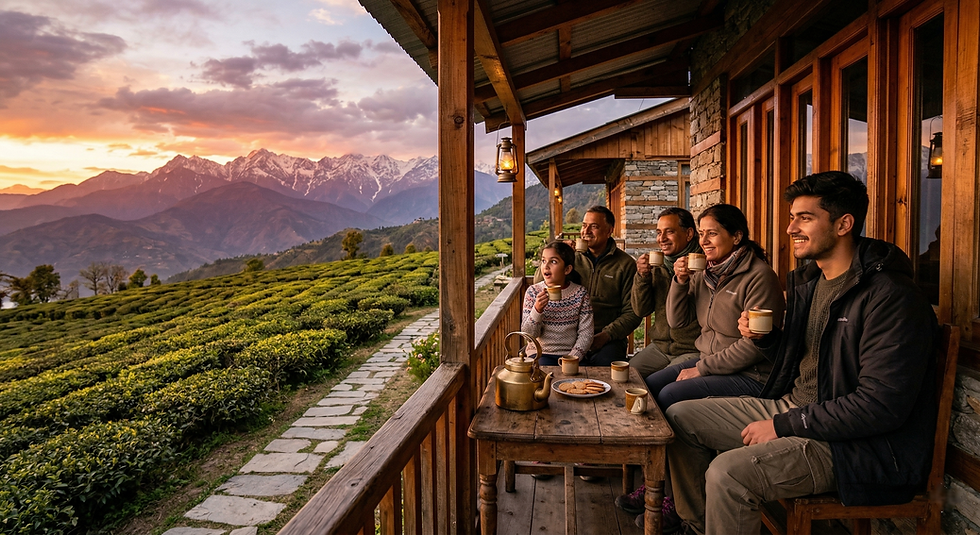
I traveled to the beautiful Kangra Valley last summer to escape the scorching city heat and experience the tranquility of the mountains. I traveled with my parents and my younger sister, making it a perfect family getaway. To prepare for the travel, we packed warm clothing, comfortable trekking shoes, and researched local homestays to ensure an authentic experience. We stayed in a cozy, wooden homestay nestled right in the middle of a sprawling tea garden, which offered a magnificent view of the Dhauladhar range. During our stay, we did a variety of activities; we hiked along the mountain trails, visited the historic Kangra Fort, and spent our evenings sipping local tea while enjoying the breathtaking mountain sunsets.


Comments